




The Full Pour: Recapping the Bottle POS Retail Liquor Summit 2026
Whether you’ve been in business for decades or are taking over an existing liquor store, it’s only natural to wonder when it’s time to make some updates.
Change is never easy — but avoiding it means missing out on opportunities to stand out from the competition and create a better shopping experience for your customers.
Worse, avoiding long-overdue upgrades can rob you of vital chances to cut costs, retain customers, and make smarter business decisions.
But when it comes to any kind of upgrade, there’s one major factor to consider: cost. In the world of liquor retail, not much is free.
In this article, we’ll help you weigh which liquor store updates you should prioritize, and how much money to budget for them.
How To Prioritize Liquor Store Upgrades
Inventory, rent, and maintenance costs are higher due to inflation and tariffs, making it harder than ever for small business owners to decide where to spend the money they do have.
One thing you shouldn’t do is pick an upgrade on a whim or based solely on intuition. Here are some tips for choosing which store updates to prioritize.
1. Define the Problem in Numbers
How big a problem are you facing, really? Let the numbers define whether a problem is as bad as it feels. Have a clear understanding of what your challenges are costing you in time and money.
For example, if you want to upgrade your point of sale (POS) system, don’t think of the price tag alone, but how much you stand to lose by not upgrading.
Ask yourself:
- How much time am I spending per week on invoicing and inventory updates? How much time can I save by switching?
- How much am I paying in credit card fees?
- How often does my system go down, and do I need to pay for maintenance?
- What are my current processes for updating and tracking inventory? How often do I find myself overordering bottles or running out of stock?
Put another way, when considering an upgrade, think of the total price of ownership, not just the short-term costs.
We get it: Some problems and goals are easier to price out than others. Crunching the numbers for a failing refrigeration unit is infinitely easier than setting a goal like “improving the store atmosphere.”
However, even for more vague goals, record key metrics like average transaction value or the average time spent in your store. This gives you a baseline to measure against as you make improvements.
Related Read: Liquor Store Sales Tracking: 8 Metrics and Reports To Manage Your Store

2. Know the (Full) Implementation Time
Liquor store upgrades shouldn’t be measured in dollar amount only — you also need to factor in time. Any update you make won’t happen instantly.
Whether you’re upgrading software or making renovations, think about these questions:
- Will I need to close the store to make this update? For how long?
- How long will it take to train my employees (e.g., learning a new POS system, learning a new layout)?
- Will this update happen all at once or in bits and pieces?
Make sure to factor in the disruptions to your store and the potential losses before diving into a big upgrade project.
3. Prioritize by Highest Impact and Lowest Cost
Many liquor store owners are excited to make their business the best it can be and want to make every change at once. However, this approach is a recipe for disappointment and lost profits.
Instead, once you quantify the problem and understand the time involved to fix it, focus on the highest-impact, least-expensive solutions first.
Start by sorting your business goals and challenges by long- and short-term. It’s more important to spend money on a leaky roof than it is to improve your marketing strategy. Figure out which fixes will cause the biggest improvement in the shortest amount of time.
Here are a few examples of short- and long-term challenges.
In other words, understand which upgrades are must-haves and which are nice-to-haves. (We’ll give you some advice on that below.)
7 Liquor Store Upgrades: Benefits & Costs
Now that you have an idea of how to prioritize your challenges and goals, let’s go into specifics.
At Bottle POS, we know everything about running a liquor business firsthand. Our business was founded by liquor store owners and is always working with other store owners to find unique solutions to their challenges.
Here are some of the most impactful liquor store upgrades to consider (and some rough costs).
1. Adopt a Modern Inventory and POS System
Liquor stores that rely on manual processes and old systems to run their business miss out on huge opportunities to reduce costs and modernize their stores.
But when is it time to consider an upgrade? Do any of these sound familiar?
An old system might be comfortable. It might also be costing you time, money, and customers.
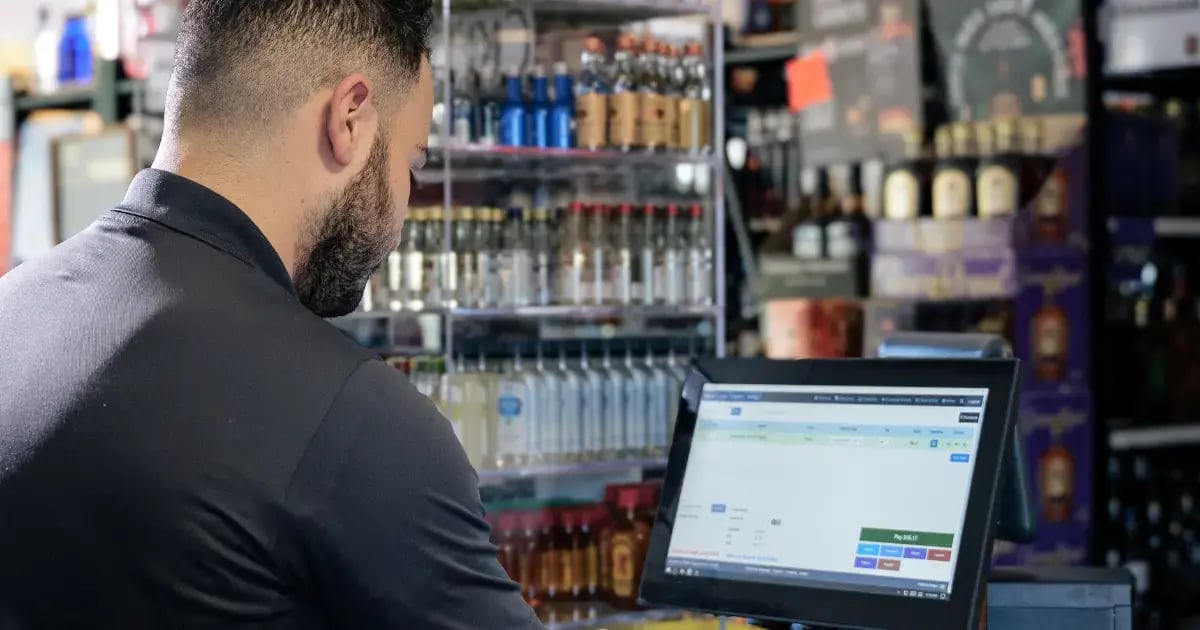
More than processing sales, the right POS system simplifies every aspect of running your business. Key features to look for in a liquor store POS system include:
- UPC and vendor database: Find systems that link directly to regional distributors for accurate product listings, automated invoicing capabilities, and built-in PO creation.
- Real-time inventory tracking: See current stock levels when you make a sale or shortly after receiving a shipment. Update inventory against invoices and view low-stock reports to avoid stockouts.
- Discount setup: Set up short-term discounts (e.g., 10% off, BOGO offers, mix and match deals) and long-term discounts (e.g., customer loyalty or wholesaler accounts) directly on your backend so discounts don’t have to be input manually.
- Sales and inventory reports: Get a bird’s eye view of store performance, including overall sales, profit margins (overall, by product category, etc.), peak hours, trending products, and other useful metrics.
- Cloud-based system: View inventory and manage your store from any location on any device. Ensure your store stays running by finding a system that can process payments while offline.
- High-risk payments: Work with vendors that specialize in high-risk businesses. This helps you find more favorable processing fees and allows your business to expand into online sales without adopting multiple systems.
- ID scanning: Use systems that let cashiers verify ID using a barcode scanner to speed up transactions and improve compliance.
- Employee management tools: Manage payroll, create task lists, and set up employee access controls, all in the same system.
- Multilocation management: Get a unified view of store performance and inventory across locations to save money and get a complete picture of your business.
These features might seem minor on their own, but together they add up. A modern system saves you time on data entry and tedious tasks. It also helps you understand your customers so you can make smarter business decisions.
Related Watch: See why independent liquor stores choose Bottle POS.
Liquor Store POS Upgrades: $1,000–$5,000 + $100/month
A liquor store POS upgrade is at the top of our list because it’s one of the cheapest and most impactful upgrades you can make.
A new liquor store POS system can cost between $1,000 to $5,000 initially. Software subscriptions usually run between $60 and $150 a month after that. Subscription costs vary depending on the size of your store, number of locations, and if you have more niche needs.
When evaluating POS providers, don’t just look at the price tag. Also consider questions like:
- Can I use my existing hardware and barcode scanners?
- Do they assist with implementation and inventory setup?
- Do they provide ongoing customer support? (Some companies charge extra.)
- What liquor-specific features do they offer?
Implementation of a new POS system can take as little as a few weeks or up to a few months. Our advice: Don’t rush it. Over half of U.S. businesses say they’ve regretted a software purchase — often because they rush into it or choose the one with the cheapest price tag.
If you want to upgrade your software, use your list of challenges as your basis for product demos. Describe how you manage aspects of your store now, and ask to see how the software can make it easier. If they can’t answer, keep looking.

2. Spin Up a Customer Loyalty Program
Customer retention is key for small businesses. Returning customers spend more on average than new ones, and a must for turning your brand into a community favorite. Setting up a customer loyalty program is a great way to keep customers coming back for more.
However, many liquor store owners hesitate to start a customer loyalty program because they think it’ll be complicated to run. The truth is, customer loyalty programs are easier than ever to manage (and are incredibly useful).
Most customer loyalty programs can be run right from your POS system, and only need a customer’s name and phone number to get started.
Once customers sign up, they can earn points on purchases. Over time, they can cash in those points for discounts or freebies like a free beer glass.
How you run your customer loyalty is entirely up to you. But be creative! Here are some general tips to ensure your loyalty program is a success:
- Make it easy for customers to sign up. Customers might not bother if they have to fill out a physical form or enter too much information.
- Make rewards exciting. Having to spend $500 just to get a free pen isn’t going to encourage customers to earn points. Advertise your rewards and make them substantial (e.g., “Every 500 points gets you 15% off your purchase!”).
- Send out offers to your loyalty members. Once you have customers’ contact information, send out personalized offers and newsletters to keep them interested.
A customer loyalty program is a low-cost, low-effort way to upgrade the shopping experience. You can also see which products your best customers gravitate toward, helping you further define your niche.
Customer Loyalty Program: $0–$100/month
Many basic customer loyalty programs can be managed directly from a POS system, but may require a higher pricing tier or paid add-on. Talk with your POS system provider for specifics.
There are third-party systems you can use, too, but we don’t often recommend them unless you own a liquor franchise or do a lot of business online. These systems offer more customization, but are generally more expensive and complicated to set up.
That said, the costs of running a customer loyalty program are negligible compared to the potential for increased profits and better marketing.
3. Invest in Creative Standing Displays and Signage
More customers may be ordering alcohol via nationwide sellers or third-party services like DoorDash, but the vast majority of liquor sales still happen in person.
A great liquor store captures customers’ attention with new arrivals, local selections, and great deals from the moment they enter the store. This makes investing in attractive displays and signage a helpful shortcut for stores looking to stand out from the crowd.
Here are some potential items to upgrade:
- Highlight staff picks, locally-made items, or on-sale items with custom shelf-edge signage. Use bright colors to draw customers’ attention as they browse.
- Draw attention to current promotions, a new liquor release, or a holiday display using large standing displays for the front of the store.
- Place smaller standing displays in the aisles themselves to upsell customers with complementary products.
- Showcase popular products or seasonal deals with endcap displays that sit at the end of aisles.
- Inject your store with some personality and highlight short-term deals with reusable handwritten signage.
- Create a classy feeling wine section, and make it easier for customers to examine labels and different brands of wine with lay-down wine racks.
- Install warm lighting to create a warm and welcoming atmosphere. The wrong lighting can make stores look dingy or run-down. LED light fixtures are also more energy efficient.
Upgrading your promotional displays leads to more effective sales events and boosts customer retention by making your store more fun to browse.
In addition to friendly and knowledgeable staff, how your store feels has a huge impact on your success.
Promotional Display Upgrades: $500–$10,000
Unfortunately, the cheaper cardboard displays often used in grocery stores will collapse under the weight of liquor and wine bottles. Invest in metal or wood standing displays instead. These can cost between $150 and $500 each, depending on size.
Tilted wine racks are pricier, costing $600 for a smaller rack and thousands for a larger display. To save money, start with lay-down wine racks for only your most popular varieties.
Shelf edge signage will be your cheapest upgrade. Start by using handwritten signs, then upgrade to more durable printed signage if you see it’s working.
4. Replace Refrigeration Units and Repair Cold Storage Areas
Most liquor stores have a walk-in refrigerator and display case for beer. If your refrigeration unit is older, it may be running inefficiently — and this can cost you hundreds of dollars in extra utility costs.
If you have a small store without a walk-in, your individual units might be aging out. Making some minor repairs and upgrades can cut down on your utility costs and save you from a more costly replacement.
First, check the status of the seals on all refrigerator doors and the door of the walk-in. Replace any broken or brittle seals to help keep cool air in. Clean out cooling coils regularly.
It might also be worthwhile to hire a refrigeration specialist to check and repair older systems. Remember: Occasional repairs are cheaper than if your entire unit fails. That said, beer won’t spoil if a unit fails, but your customers will be disappointed with buying lukewarm beers.
Refrigeration Upgrades: $500–$15,000
The most expensive upgrade for your walk-in will be a new refrigeration unit, which can cost between $3,000 and $6,000. Repairs, on the other hand, vary from $100 to $1,200.
If you think you’re ready for a new unit, price out how much your utility bills will drop month by month. See how long it will take for a newer, more efficient unit to earn its money back.
If you have no walk-in storage in your store, but want to offer cold beer and wine, you can invest in several standing fridges. Standing reach-in refrigerators cost between $1,700 and $5,000 for individual units.
5. Revamp Your Store Layout and Shelving
Revamping your liquor store design is an excellent way to upgrade the customer experience and give your store a fresh start — but it is a big undertaking. Before doing a full revamp, we recommend investing in new displays first.
Don’t make changes on a whim. A new layout isn’t guaranteed to be better. Have a reason behind the changes. Ask yourself these questions:
Your sales reports will help you answer some of these questions — others you’ll have to base on honest customer and staff feedback. Read online reviews of your store and see if frequent complaints come up.
Layout Update: $2,000–$40,000
The costs for layout upgrades at your liquor store can vary considerably. If you need all new shelving, you’ll spend a lot more money — and you’ll probably need to hire contractors to help assemble and dispose of old units.
If your shelves are in good shape, your upgrades could simply cost time and labor as you move everything around. That’s why it’s vital to figure out why you want to upgrade your layout so you can be strategic with updates.
Put it this way: If you identify that your biggest layout issues are in the back corner of the store, or only in the wine section, there’s no need to redo the whole store.
Don’t rule out replacing your shelving because it’s more expensive, though. The goal of shelving upgrades is to get the most out of your limited space. Different shelving layouts make browsing easier for customers and allow you to stock more units in a small area.
Lighter colors or different materials can also give your store a significantly different look and feel (more on this below). With your aisles taking up a significant portion of your store, updating the shelving can have a major impact on your store’s general atmosphere.
6. Set Up Online Ordering and Curbside Pickup
One of the biggest emerging liquor trends is the rise of online sales and e-commerce. Online liquor sales help you reach new customers and give your existing customers a convenient buying option.
There are a few paths to take for online sales, but all of them require a compatible POS system. A modern POS system lets you connect your in-store and online inventory. This ensures customers get an accurate view of your selection and stock levels, no matter how they buy online.
Here are a few options to consider if you’re thinking of leveling up your store with online sales:
- Allow customers to buy online and pickup in store (BOPIS). This is a good option for stores just starting in online sales since delivery can be an expensive and complicated option.
- Partner with third-party services. If your system integrates with popular services like DoorDash, you can offer online sales without the extra labor of curbside pickup or delivery.
- Set up in-house delivery or use a trusted delivery partner. Delivery is the most convenient online shopping option, but it’s also the most expensive and complicated for small liquor store owners.
Even if you aren’t ready to offer online sales, having a POS system and a website that shows your selection online can be great for business. Many of today’s customers prefer to browse online before shopping in person.
Online Liquor Sales: $0–$3,000
The cheapest option for online sales is to let customers email you with requests and then arrange pickup in store. But while this method is inexpensive, it isn’t particularly convenient for customers or staff. Its success is tied to how often you remember to check your email — not ideal.
Your best option for online sales is through a compatible POS system. An integrated POS allows you to set up a webstore. From there, payments, stock updates, and order management is handled through the same system.
Delivery and last-mile logistics are the most expensive and most complicated. Third-party services like DoorDash take a percentage of sales in exchange for sending someone to pick up and deliver orders, so it’s important to account for those added costs if you use them.
If you choose to use your own vehicles, your drivers need to be licensed (in some states) for alcohol delivery, and your vehicle must be insured for commercial delivery. For small liquor stores, we recommend limiting delivery to certain area codes, then expanding as you get more comfortable.
No matter how you do it, online sales will create some extra labor costs. Before diving into online sales, make sure you have a full understanding of the end-to-end process and see if the sales boost is worth the extra effort.
Get Better Visibility and Save Time With Bottle POS
If you’re ready to make long-overdue upgrades to your liquor store, but aren’t sure where to start, here’s our advice:
- Get into the minds of your customers. Is your store offering the ideal shopping experience you would want? If not, why?
- Make a list of annoyances and pain points. Most staff and store owners know instinctively what’s working and what’s not. Compare your list of pain points against your potential upgrades to figure out which will be most useful.
- If all else fails, focus on high-impact, low-cost. It’s worth saying again that big improvements aren’t the same as expensive ones. If you have multiple options, start with the most cost-effective ones.
Many liquor store owners are held back by outdated software or systems that aren’t specifically tailored to liquor retail.
At Bottle POS, we design specialty POS solutions for liquor stores, wine shops, and beer stores to help them run their store more efficiently, simplify operations, and drastically improve the customer experience.
While many systems overpromise and underdeliver, Bottle POS cuts the fat present in most generic POS systems to give liquor store owners the features and tools they actually need.
Schedule a custom demo today to see how Bottle POS gives you better visibility into store performance and helps you run more smoothly.

With 20 years in retail — 10 in the liquor industry — Kevin Patel has seen it all. A liquor store owner himself, Kevin wants to give other small business owners the technology to compete with big box stores. Kevin writes extensively about profits, marketing, and inventory management — three topics he believes every liquor store owner should learn about. "I built Bottle POS to make enterprise tools, mobile inventory, and cloud technology affordable so independent stores can compete with big chains."