


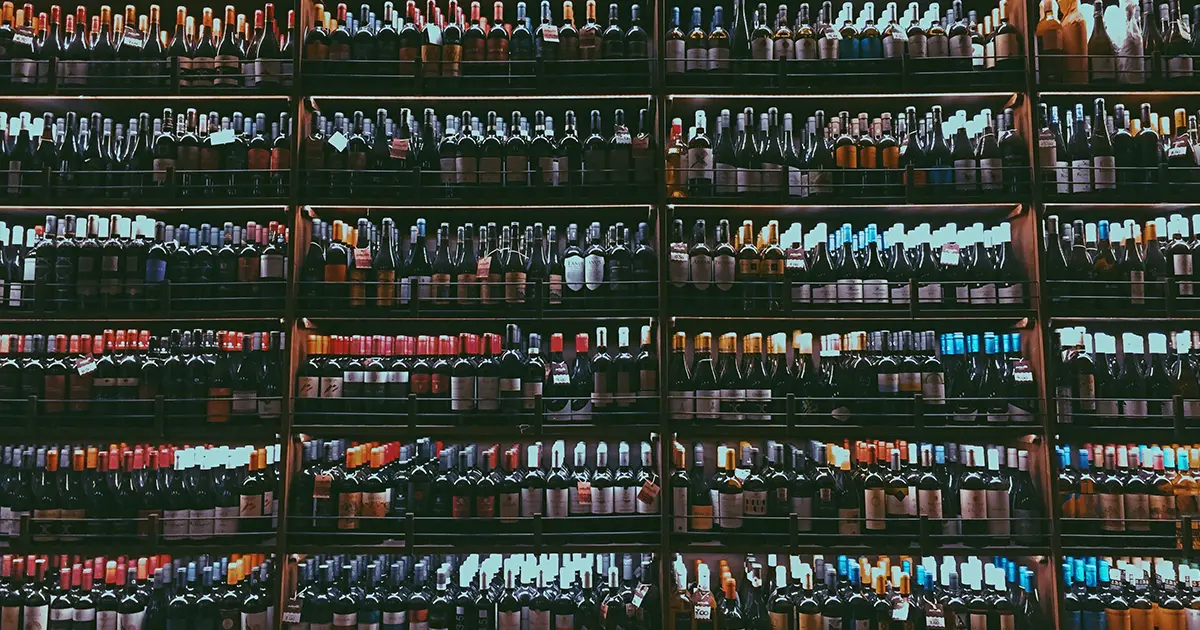


What To Sell in a Wine Shop in 2026: Top Bottles To Stock
Nowadays, wine is in every supermarket and convenience store cooler. Customers can pick up a sauvignon blanc or a merlot during their regular grocery shopping trip — so why do they make a special visit to their local wine store?
The answer is relationship.
Wine store success is not just about having the right location, competitive prices, or an expert-curated selection. It is about connecting with customers, building trust, and creating an experience they cannot get anywhere else. That is where marketing comes in.
A solid wine marketing strategy does more than drive one-off sales. It builds the kind of loyal customer base that comes back regularly, spends more per visit, and recommends your store to others. From in-store events and social media to loyalty programs and seasonal promotions, the right mix of tactics will transform your store from just a place to buy wine into a destination.
Wine Marketing Tip: Don’t Be Afraid To Shake Things Up
There’s a lot to do when running a wine shop or liquor store, and marketing may be an afterthought. It can be tempting to fall back on simple coupon codes and straightforward discounts when you're busy.
While there’s nothing wrong with the occasional discount code, they’re not likely to drum up excitement for your business or bring in new customers.
Wine is very experiential, and as price points for basic bottles rise, it takes more to build trust with customers and meet their expectations. That’s why supplementing marketing with events and educational materials is more important than ever. Don’t be afraid to try new things. If you or your staff has a love for wine, tap into that passion to create novel marketing ideas that will transform your business from just a place to buy wine to a place to have an exciting wine-buying experience.
9 Wine Marketing Strategies To Excite Customers
With so many varied options (and opinions) on wine, it’s hard enough to decide on what bottles to sell, let alone how to sell them.
While having knowledgeable and friendly staff will always be your first port of call, here are nine additional strategies (plus one bonus tip) to boost your wine sales this year.
1. Nurture Customer Loyalty With a Wine Club
Starting a customer loyalty program is step one in the wine marketing playbook. Loyalty programs are highly effective in boosting customer retention and sales, since they reward shoppers for choosing your wine store over the competition. The more they spend, the more they save.
You can even start an exclusive wine club for your most valuable customers, giving them the chance to try rare and limited edition bottles before the rest of your shoppers.
Along with building loyalty and driving steady sales, a wine club or rewards program helps you collect valuable data, including customers’ contact information and purchase history. You can use this to learn more about your most important shoppers and tailor your offerings to their preferences and habits.
How To Implement It
First, let’s talk about the logistics of managing a wine club.
Your best bet is a point of sale (POS) solution with a built-in customer relationship management (CRM) system and loyalty program. This tool lets you create unique customer profiles, monitor purchase histories, and track loyalty points.
Your cashiers should be able to enroll new members, check loyalty program statuses, and redeem discounts and perks within seconds.
Next, let’s cover how to get customers to sign up for your wine club or loyalty program. Give your staff thorough training on the benefits, structure, and logistics, ensuring they’re ready to answer any customer questions.
You can also display signage near your checkout counter to promote your program, highlight the benefits, and remind existing members to enter their phone number in order to earn points on each purchase.
Related Read: The Ultimate Guide to Liquor Store Loyalty Programs
2. Hold Tasting Events and Pairing Nights
With the average price of starter wine bottles rising to around $30, customers are more hesitant to try something unfamiliar. A tasting event removes that hesitation — it gives people a low-risk way to discover new bottles, learn about different regions, and build confidence in their choices.
Hosting a monthly or quarterly event also solidifies your shop as a go-to destination. Customers get into the habit of stopping by, and they will usually take home at least a few bottles.
How To Implement It
Start with a theme to give your event focus and make it easier to promote:
- Highlight a particular vineyard, brand, or region
- Launch a beginner wine course to welcome new wine drinkers
- Feature a new product arrival with guided tasting notes
- Host a seasonal or holiday-themed tasting
Here are a few event formats that work well for wine stores:
- Bring in a sommelier: A sommelier can teach customers about the wines on your shelves, build credibility for your selection, and help move specific bottles
- Host pairing nights: Partner with local cheese shops, bakeries, or butchers to provide pairing options in exchange for cross-promotion
- Add entertainment: Invite local musicians or performers to use your shop as a venue on Friday or Saturday nights — it turns a tasting into an evening out
Depending on the event, you can make it free or charge a small entry fee through your POS system. For free events, give attendees an exclusive discount code — it encourages a follow-up purchase and gives you a way to measure the event's impact.
Before planning anything, check your local and state alcohol marketing regulations. Sampling rules vary widely — some states prohibit free alcohol entirely, others allow small pours of 1 oz or less. Confirm what is permitted in your area, keep portion sizes small, check IDs throughout, and assign your most knowledgeable staff to the tasting table.
Promote your event through email, SMS, social media, and in-store signage in the week leading up to it.
Related Read: How to Plan a Wine Tasting Event

3. Run Wine Bottle Giveaways
On its surface, giving away products for free seems like an awful business decision — but that couldn’t be further from the truth.
The key to a successful giveaway is getting something in return, such as a social media follower or a signup for your customer loyalty program or newsletter.
For example, you could run a giveaway on social media where entrants have to follow your account and tag a friend to enter. This is a low-effort way to gain new followers who might continue following your store after the giveaway.
While you could hold a giveaway the old-fashioned way (by filling out a card and putting it in a box), you’d miss out on opportunities for further marketing.
4. Create Product Bundles and Discounts
Wine lovers love wine paraphernalia — and if you can offer it as a bonus, even better. Use your POS system to create custom product bundles or discounts that encourage upselling.
For example, you could create a red wine starter kit that lets customers choose from select bottles and a wine decanter. Or you could offer 50% off a decanter with a purchase of $60 or more. As long as your POS system is flexible enough, the only limit is your creativity.
In addition to discounts and bundles, be mindful of your store layout. Place complementary items near your wine section or at the ends of shelves to catch shoppers’ attention as they browse.
5. Create Informative Signage
Signage is an invaluable marketing tool and an often overlooked and undervalued part of the shopping experience. Beyond orienting customers in your store, great signs are also helpful for what in marketing is called “storytelling.” Storytelling signs are informative signs that connect customers to brands and get them invested in products. For example, a sign that gives a background or history for a certain vineyard or region.
These signs can be incredibly effective marketing tools since they help customers feel like experts. Practically, having some informative signage also makes a wall of wine bottles much less intimidating and easier to navigate.
Create both reusable signage to educate people (e.g., signs on tasting notes, different regions, differences between types of wine, etc.) and short-term signs for things like sale items, new brands, wine scores, and more.
Related Read: Liquor Store Merchandising 101: Signage, Displays, and Layout
6. Run Holiday and Seasonal Promotions
Timing is everything — especially when it comes to wine marketing.
Wines are used in celebrations of all kinds and are especially popular during holiday seasons—mulled wine for Christmas, champagne for New Year’s, or a sumptuous red blend for Valentine’s Day.
Take advantage of holidays and seasonal events by running themed in-store promotions — complete with visual displays. Run discounts on popular seasonal wines to encourage bulk sales or upsell more expensive bottles.
Use the reports and sales data on your POS system to determine which types of wine are most popular with your customers during different seasons.
And get creative. For example, March is International Women’s Month, so you could top up a table full of wines made by women-owned businesses. National Chianti Day? Set up a spread of different brands of the Italian red.
Picture this: It’s a slow weekday, and you’ve only had a few customers stop by to buy one bottle each. To turn things around, you send a quick text blast to your customers: “TODAY ONLY: Get 15% off your total when you purchase 3+ bottles!”
Suddenly, your store is buzzing with customers.
SMS and email marketing are some of the most effective marketing strategies for wine stores because they reach customers right where they are. You can use these channels to send everything from timely flash sale announcements to in-depth educational newsletters tailored to your most discerning customers.
How To Implement It
Here are a few tips for using emails and text messages to drive wine store sales:
- Understand when to text vs. email: Text marketing is best for short, timely reminders about promotions, while email marketing is best for longer announcements and educational content.
- Use your POS system to collect contact information: When customers sign up for your wine store loyalty program, your POS system should prompt them to opt in to marketing texts and emails as well.
- Send messages consistently: Avoid spamming your customers with too many messages, but don’t be too sparing in your marketing newsletters, either. We recommend weekly or biweekly for the best results.
- Send valuable content: Make sure what you’re sending is actually valuable for your customers. Share your expertise, highlight seasonal or limited-edition bottles, and announce in-store events.
- Segment your customer base: Not all messages will appeal to all of your customers, so try segmentation. For example, you can send a personalized offer to shoppers who purchased a rosé in the last month.
Sending educational emails and promotional texts can help you stay top-of-mind for your customers, ensuring they rely on you for all of their wine needs.
Related Read: 8 Strategies for Liquor Promotions
Tens of millions of active users use social media daily, making it increasingly vital for small business marketing: 61% of customers use platforms like Instagram to discover new businesses and products.
Why is social media so beneficial? There are many reasons! Namely, it:
- Lets you put a human face on your brand
- Gives you opportunities to talk directly to customers
- Allows you to educate customers on different wines
- Gives you a way to announce new product arrivals and discounts
- Helps you spread the word about upcoming events
- Gives you another way for people to find your website and newsletter
If you’re new to social media marketing, choose one platform and post two or three times a week. The key is consistency. The more regularly you post, the more likely you are to show up in people’s feeds.
Don’t forget to put your business contact information and website links in your profile.
Posting on social media allows you to showcase what makes your business special, interact with customers, and keep followers in the loop about everything happening in your wine store.
How To Implement It
Our top tip is to post valuable content consistently. Here are a few post ideas to get you started:
- Share your small business story: Tell followers the story behind your wine store, including how you got started, how you’ve grown, and why you love what you do.
- Showcase staff favorites: Share your team members’ favorite bottles and recommendations.
- Offer pairings: Help customers plan their parties by suggesting expert wine and food pairings.
- Educational posts: Offer beginner-friendly tips for storing and serving wine, share fun facts about the history of wine, or teach followers how to read wine labels.
- Polls and interactive content: Ask your followers questions like, “Red or white wine with steak?” or “What should be our next Wine of the Week?”
If social media sounds intimidating, start by posting once or twice per week on a single platform.
Pro tip: Short-form video has transformed the social media landscape. If you’re serious about growing your followers and turning them into customers, consider filming and publishing short-form videos using trending formats and audio.
Related Read: 5 Social Media Strategies for Your Liquor Store
9. Sell Wine Online
Looking to bring new customers to your wine mart without them having to pass through your front door? Opening an online wine store allows you to connect with a much wider variety of customers than a physical storefront could attract. With a virtual storefront, any time someone searches for your store online, they’ll have the option of ordering a few bottles of their choice from the comfort of their couch. This convenience is a major draw, and is guaranteed to convert a potential customer to a return one with the click of a mouse.
Modern POS systems can remove the hassle of creating a web store by yourself. For example, Bottle POS comes with its own integrated e-store, BottleZoo, which enables your in-stock products to appear on Google when customers search your wine store.
Once customers choose their reds and check out, your store will receive the order through your POS software, and you can fulfill the order via delivery or customer pickup.
BottleZoo’s third-party delivery service integrations, such as DoorDash, will drop off your customers’ bottles directly at their front door.
BONUS TIP: Use Data and Track Your Success
Changing up the types of marketing you do is an excellent idea, but it’s not the same as throwing ideas against a wall and seeing what sticks.
Taking a measured, strategic approach will help you get the most ROI from your marketing efforts.
When planning events and promotions, use the data on your POS to understand your bestsellers, peak hours, customer buying trends, and more. This will help you determine what your customers are interested in before you spend a penny.
Then, after you run an event or sale, use your POS system to track the results. That way, you can home in on what’s working (and what’s not).
Related Read: Liquor Store Analytics: 4 Metrics to Track
Improve Your Wine Marketing Effectiveness With a Trusted Partner
A good marketing idea isn’t just a way to make more money; it’s a way to learn about your customers and create deals they’ll truly love. However, coming up with creative promotions and running successful promotions isn’t easy when you’re bogged down in day-to-day processes.
That’s why many liquor store and wine shop owners rely on industry-specific software to simplify and modernize how they run their stores. Bottle POS is a comprehensive solution tailored for wine stores, with easy-to-use tools for marketing promotions, reporting and sales history, customer loyalty, and more.
Schedule a demo with our experts today to see how Bottle POS can supercharge your marketing efforts in 2026.

With a degree in digital media and a minor in writing, Nate has been helping to explore the stories and unique characteristics of the liquor industry for the past three years. He highlights the synergy between the changing landscape of tech and liquor, and enjoys focusing on our customers’ experiences.