




The Full Pour: Recapping the Bottle POS Retail Liquor Summit 2026
Your customers have a lot of options. They’re looking for guidance both when they seek out your store and once they step through the doors.
The right liquor store signage and visual merchandising strategy doesn't just point them in the right direction — it builds confidence, encourages exploration, and helps them discover their next favorite bottle.
But what do we mean by the “right” liquor store signage strategy? How can you get the most out of your signage and boost business in your liquor store?
This post covers the types of liquor store signage available to you, 10 proven ideas to put them to work, the compliance requirements every store owner needs to know, and the design principles that make it all hold together.
Let’s get started.
Why Liquor Store Signage Matters
Before we get into the weeds, let’s establish something important: Why are liquor store signs so, well, critical?
Think of your signage as the hardest-working employee in your store: It never calls in sick, works 24/7, and helps customers even when you're not around. Great signage works as a silent salesperson, guiding customers through your store, educating them about products, and nudging them toward that extra bottle they didn't plan to buy.
Related Read: 7 Liquor Display Ideas To Maximize Liquor Store Sales
Strategic signage placement can also boost your average transaction size by highlighting complementary products or premium options at just the right moment. Plus, consistent, professional signage reinforces your brand and builds the kind of trust that turns first-time visitors into loyal customers.
Types of Liquor Store Signage
Before diving into specific ideas, it helps to understand the full range of sign formats available to you — because different sign types serve very different purposes, from pulling customers off the street to closing the sale at the shelf.
Outdoor Signs
- Storefront signs: Channel letters, cabinet signs, or neon mounted on the building facade. Your primary brand statement and the first thing a new customer sees. Illuminated versions extend visibility into evening hours, which matters for stores that do strong after-work trade.
- Window signs: LED brand signs, vinyl lettering, and window clings. Promote specific products, advertise hours, and add visual interest at street level without requiring a permit in most jurisdictions.
- A-frame and sidewalk signs: Chalkboard or dry-erase boards placed on the sidewalk. Low-cost and easy to update; good for daily specials, promotions, or drawing foot traffic from nearby pedestrians.
- Pole and monument signs: Large freestanding signs for strip mall or standalone locations. Essential for road visibility when your storefront isn't directly facing traffic.
Indoor Signs
- Aisle and category signs: Overhead or shelf-mounted signs that organize your store and help customers navigate to the right section quickly.
- Shelf talkers and price tags: Product-level callouts for pricing, tasting notes, staff picks, and limited-release flags.
- Endcap signs: Promotional signs at the end of each aisle, supporting your highest-visibility in-store real estate.
- Compliance and age verification signs: Legally required postings including "We ID" notices, "No sales to minors" signs at entrances, health warnings, and your liquor license. Most states specify minimum size and placement — check with your state ABC board for exact requirements.
- Checkout counter signs: Impulse prompts and payment information at the register.
- Digital screens: Dynamic displays for rotating promotions, product highlights, and seasonal content.
10 Liquor Store Signage Ideas To Inspire You
With this context in mind, let’s explore seven liquor store ideas you can use to inspire some new signs for your store.
The first idea you might try is implementing high-definition digital screens to showcase your products. A digital display is more eye-catching than a static sign and can easily be updated to showcase new promotions or products.
With digital displays, you can:
- Instantly update pricing and promotions without reprinting.
- Showcase seasonal cocktail recipes and pairing suggestions.
- Get real-time inventory integration.
If you’re interested in implementing digital signs in your liquor store, you’ll want to follow a few best practices, like positioning it near your entrance and rotating content every 15–30 seconds to keep it fresh and interesting.
If you invest in a top-tier point of sale (POS) system, you can use real sales data to inform what products you promote on your digital signs. You can also rotate different promotions weekly, depending on your store's daily sales patterns.
2. Educational Signage
Educational signage might seem like an odd choice for a liquor store, but let’s explain what we mean. Your customers want to feel confident about their purchases, especially when checking out a new product. Educational signage with information like tasting notes and product origins can help a customer feel more excited and confident about trying something new.
Here are some ideas for educational signs for your liquor store:
- Whiskey flavor wheels to help customers understand different expressions
- Wine region maps that tell the story behind each bottle
- Cocktail recipe cards featuring your premium spirits
- Staff pick recommendations with personal tasting notes
Related Read: How To Host a Beer Tasting Event at Your Liquor Store
Pro tip: Include QR codes in your educational signs. This approach helps customers easily access more information without cluttering your in-store signage with tons of text.
3. Wayfinding Signs
Clear navigation is one of the main purposes of in-store signage. You want your customers to be able to find what they’re looking for quickly. When a customer knows they can find what they need, they’re more likely to feel comfortable shopping in your store — which makes them want to return or spend more time (and money) on that first visit.
Let’s take a look at some best practices:
- Use consistent fonts, colors, and design elements.
- Use clear category names and include icons.
- Install overhead hanging signs.
- Consider multilingual options if relevant to your market.
The categories that need signage will depend on your inventory and market. Some categories to consider include premium spirits, local products, and seasonal selections.
Remember: Well-planned wayfinding is a salesperson, too. The right signage subtly guides customers through your store in a way that exposes them to your highest-margin options.
4. Promotional and Sale Signage
Promotions and sales help you boost profits, drive foot traffic, and move aging inventory. The trick to getting the most out of your in-store promotions is, you guessed it, the right in-store signage.
The key to promotional and sale signage is making your deals impossible to ignore without being pushy.
Here are a few types of promotional signage that tend to work well for liquor stores:
- Shelf talkers for individual product promotions at the point of decision
- Large format banners for store-wide sales and new arrivals
- Window clings to catch the eye of passersby before they enter
- Endcap displays for featured deals and limited-time offers
Your POS system can identify the right products to promote based on real sales data, helping you plan promotions that move the needle.
5. Interactive Signage
One of the best ways to engage customers is to give them a way to interact with your liquor store. This approach works particularly well with younger demographics and encourages customers to connect with you on social media, which can help you grow.
Here are a few ideas for interactive signage in your store:
- QR codes linking to cocktail recipes featuring specific spirits
- Social media walls displaying customer posts and reviews
- Virtual tastings and educational content accessible via QR code
- Codes linking customers to your social media pages or newsletter sign-up
The goal is to get your best customers to engage with your store beyond your brick-and-mortar location.
6. Seasonal and Event-Based Signage
Seasonal trends are huge in the liquor industry — you can take advantage of those trends as they ebb and flow by installing seasonal signage. People think differently about their drinking habits throughout the year, and your signage should reflect these changing moods.
Rotating your signage based on the season gives you a regular opportunity to refresh your liquor store’s look and helps you highlight different inventory throughout the year. It also subconsciously creates urgency for your customers. You can really get creative here, looking beyond just signage and creating full point of purchase displays.
Here are some seasonal trends to consider adjusting signage for:
- Summer cocktail stations with light wines, gins, and refreshing recipes
- Winter displays featuring rich bourbons and warming spirits
- Holiday gift bundles and entertaining essentials
- Local event tie-ins like Super Bowl parties or team celebrations
Limited-time displays encourage customers to act now rather than wait, which can boost your average basket size.
7. Custom Branded Signage
Last but not least, don’t forget the biggest thing setting you apart from large chain competitors — your store’s personality! Custom signage is key to keeping your branding consistent and making your store’s personality stand out.
Not sure where to start with custom signage? Here are some ideas.
- Hand-drawn chalkboard art
- Local artist collaborations
- Creative neon signs
- Reclaimed wood displays and bottle arrangements
Custom signage makes your store more memorable. If you create particularly entertaining or “Instagrammable” signage, you can also generate word-of-mouth marketing through your custom store signage.
8. Exterior Storefront Signage
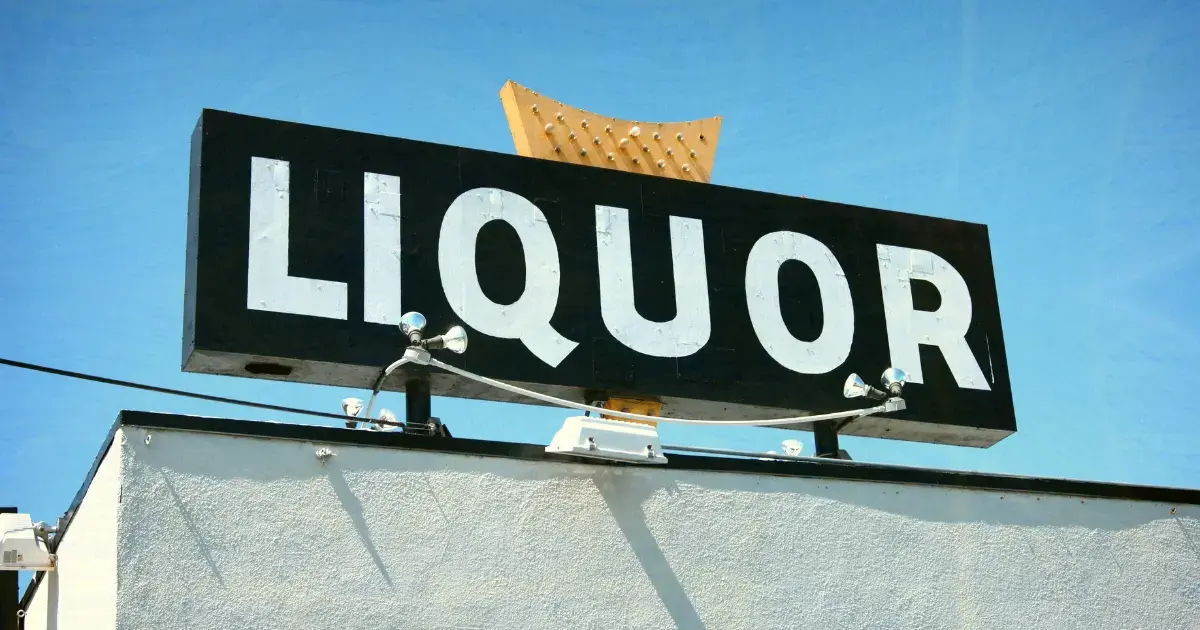
Your exterior sign is your store's first impression — and for many customers, it's what determines whether they walk in at all. Illuminated channel letter signs and cabinet signs establish your brand identity and remain visible after dark, which is critical for stores that see strong evening traffic.
Neon signs carry a visual shorthand that works particularly well for liquor retail: they're warm, recognizable, and readable from a distance. Whatever format you choose, make sure your store name is legible from the road and that lighting is functional year-round.
9. Supplier and Brand-Provided Signage
Most liquor brand reps will provide free signage — standees, shelf talkers, neon brand signs, and branded display materials — at no cost to you.
It's worth asking your distributor contacts what's available, particularly around new releases, seasonal promotions, and major holidays. The practical limit: supplier signage should complement your store's identity, not dominate it.
Accepting too much brand-provided signage can make your store feel like a billboard rather than a retail destination. Note also that some states have tied-house laws restricting how prominently supplier-provided materials can be displayed — check your state ABC board's guidelines before papering the walls.
10. Signage Consistency and Brand Alignment
Individual signs that work well in isolation can still undermine each other if they don't form a coherent system. Choosing a consistent color scheme, limiting the number of fonts and sign styles in use, and applying the same format across similar sign types — shelf talkers, category headers, promotional signs — makes your store feel intentional and professional.
The trend in liquor retail is away from visual clutter; too many competing signs reduce the impact of each one. A tight, consistent signage system builds the kind of brand trust that turns first-time visitors into regulars.
11:14
Liquor Store Compliance Signage: What the Law Requires
Compliance signage isn't optional, and it isn't just a formality. Getting it wrong — wrong size, wrong placement, or simply missing a required posting — can result in fines, a failed inspection, or in serious cases, license suspension. Here's what most states require and what to watch for.
-
"We ID" and "No sales to minors" signs. Most states require at least one age verification notice posted at or near every public entrance, visible from the exterior, and a second notice posted prominently inside the store. Many states specify minimum dimensions — California, for example, requires these signs to be at least 7" x 11" with lettering at least 1" in height. Check your state's ABC board for exact size and wording requirements, as they vary.
-
Health warning signs. Federal law requires alcohol health warning notices to be posted in any establishment that sells alcoholic beverages for off-premises consumption. California adds additional requirements under Prop 65, which mandates specific cancer and reproductive harm warnings with prescribed wording, font sizes, and placement. If you operate in California or a state with similar provisions, verify you have the correct version of the warning posted.
-
Liquor license display. Your liquor license must be posted in a conspicuous location on the premises — typically near the register or at the entrance. Operating with an expired or incorrectly displayed license is a compliance violation even if the license itself is valid.
-
Suspension notices. If your license is ever suspended, most states require you to post specific suspension notices on both the exterior and interior of your store for the duration of the suspension. Failure to post these is an additional violation on top of the underlying suspension.
-
A note on state variation. Compliance signage requirements differ significantly from state to state — and sometimes between cities within the same state. The requirements above represent common standards, but they are not universal. Always verify current requirements directly with your state ABC board, and revisit them any time you renew your license or move locations.
Liquor Store Signage Design: Best Practices
The ideas in this article only work if the signs themselves are well executed. A promotional sign that's hard to read, a shelf talker that clashes with everything around it, or a store plastered with competing messages can do more harm than good. A few principles that apply across every sign type:
- Consistency over variety. Choose a color scheme and sign format system and apply it store-wide. One store might use only black and gold; another, white and forest green. The specific palette matters less than the discipline of sticking to it. Consistent signage reads as professional and intentional; mixed signage reads as chaotic.
- Legibility first. A sign that can't be read from the aisle doesn't work. Use high-contrast color combinations, avoid decorative fonts for any text that needs to be read quickly, and size lettering for the viewing distance — shelf talkers and category headers have very different legibility requirements.
- Limit sign clutter. More signs means less impact per sign. Every time you add a new sign, ask what it's displacing in the customer's attention. Prioritize the signs that drive decisions — category navigation, pricing, and key promotions — and resist the urge to call out everything at once.
- Integrate where possible. Signs that sit within shelving or attach cleanly to fixtures read as cleaner than freestanding inserts that block product views or fall over. Shelf-integrated signage also tends to hold up better in high-traffic environments.
- Rotate on a schedule. Stale signage stops registering — customers tune out signs they've seen too many times. Tie your rotation cadence to your promotional calendar: monthly for sale and featured product signs, seasonally for themed displays, and immediately any time a compliance requirement changes.
Liquor Store Signage Ideas: Implementation Tips
Getting your signage strategy right comes down to smart execution. Let’s explore some easy-to-implement tips for setting up your signage correctly in your store.
Related Read: How To Manage a Liquor Store in 7 Simple Steps
Start with design consistency. Your signage should feel like it belongs in your store and reflect your brand personality. Maintain the same colors, fonts, and messaging style across every sign. Make sure text is readable from various distances and angles, and consider how lighting affects visibility throughout the day — poor lighting can turn great signage into a total waste.
Next, think about placement. Eye-level positioning gets the most attention, so reserve this premium real estate for your most important messages. High-traffic areas like entrances and checkout counters are another area you’ll want to put important information like promotions and new releases. Finally, consider endcaps. These spots naturally draw the eye and work perfectly for featured products or seasonal displays.
You should also leverage technology to work smarter. Modern POS systems (like Bottle POS) can help you get the most from your store signage with real-time inventory updates, custom label printing capabilities, and sales data that shows you exactly which products deserve promotion.
Finally, stay compliant. Remember age verification requirements, local advertising regulations, and mandatory licensing displays. Good signage helps your business; compliant signage protects it.
Get the Most From Your Liquor Store Signage Ideas
Effective signage is one of the most important in-store elements for your liquor business. These seven ideas can all help you grow your business and boost your profits — but if you’re feeling overwhelmed, don’t worry. You don’t need to overhaul everything at once.
Instead, start with one or two signage improvements and build from there.
Great signage might be an investment upfront, but it pays for itself over time through increased sales, larger basket sizes, and more loyal customers. When customers can easily navigate your store, understand your products, and discover new favorites, everyone wins.
But the right liquor store signage is only the beginning. If you want to run a successful liquor store, you need the right tools. And the most important tool in your arsenal is the right point of sale system.
The right POS system streamlines operations and helps you get the most out of these signage tips. With real-time inventory data, you'll know exactly which products to feature. Custom label printing capabilities let you create professional shelf talkers and promotional signs without the hassle. Sales intelligence shows you what's working and what isn't, so you can make changes to your displays based on real data, not gut feelings.
Your signage works 24/7 to grow your business — shouldn't your POS system work just as hard?
Schedule a demo to see how Bottle POS can support your efforts with integrated tools designed specifically for liquor store owners like you.

With a degree in digital media and a minor in writing, Nate has been helping to explore the stories and unique characteristics of the liquor industry for the past three years. He highlights the synergy between the changing landscape of tech and liquor, and enjoys focusing on our customers’ experiences.